
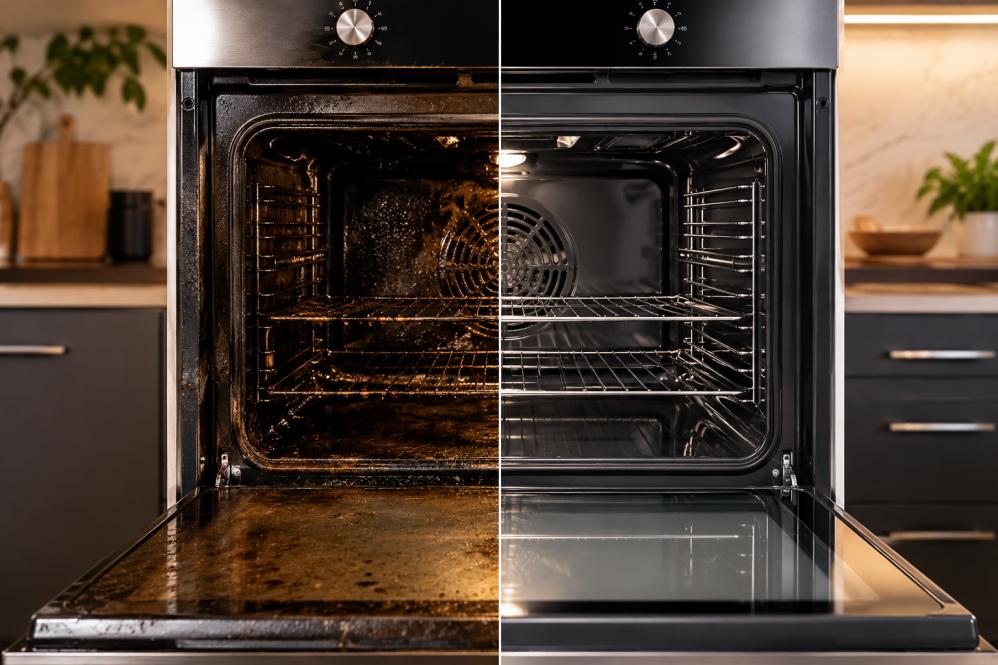
Most people don’t think too much about their oven until it starts causing problems. One day it begins smoking while cooking dinner, the kitchen smells burnt before food has even started cooking, or the oven door becomes so cloudy with grease you can barely see inside anymore.
The reality is that ovens slowly collect layers of grease, burnt food, oils, smoke residue, and carbon buildup over time. Because it happens gradually, many homeowners simply get used to it without realising how dirty the appliance has actually become.
A neglected oven isn’t just unpleasant to look at either. Heavy buildup can affect cooking performance, create strong smells, trigger smoke alarms, and make the entire kitchen feel dirty and greasy.
While a quick wipe-down here and there helps, there comes a point where an oven needs a proper deep clean. Below are seven clear signs your oven may be overdue for professional cleaning.
1. Your Oven Smokes Every Time You Use It
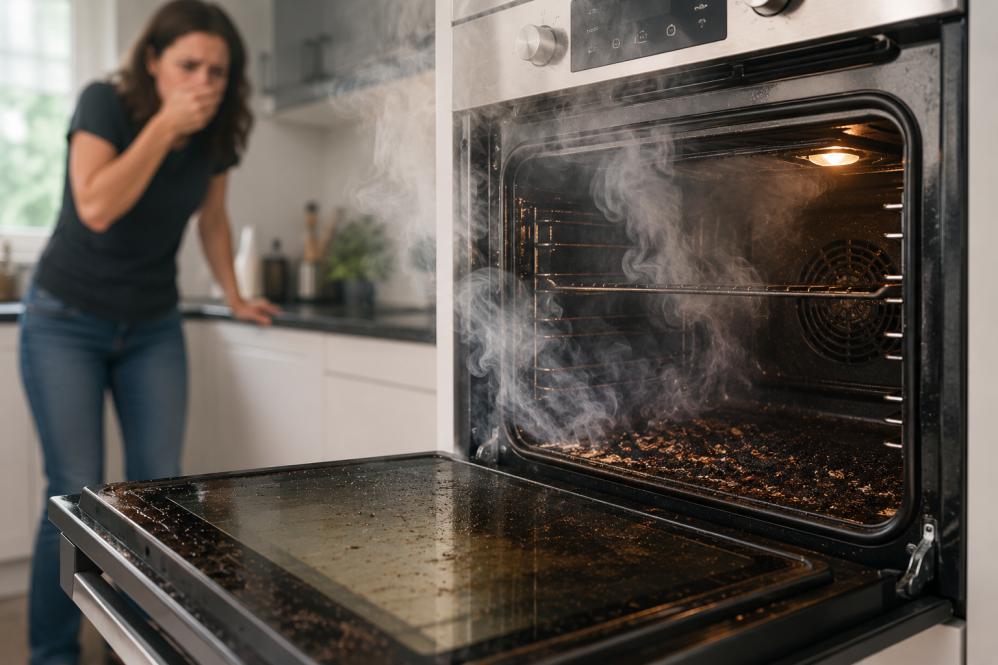
One of the most obvious warning signs is smoke appearing whenever the oven heats up. While a tiny amount of smoke can occasionally happen after a spill, regular smoke is usually caused by old grease and food residue burning inside the appliance during every cooking cycle.
Many people assume ovens simply do that, but a properly cleaned oven should not fill the kitchen with smoke every time dinner goes in.
Why It Happens
Grease splatter from cooking slowly sticks to internal surfaces over months and years. Every time the oven heats up again, those old layers continue burning.
The worst buildup often hides:
- around heating elements
- beneath oven floors
- near fan covers
- along door edges
- inside corners
- on racks and trays
Over time, the grease hardens into thick carbon deposits that become extremely difficult to remove with ordinary household products.
Why You Shouldn’t Ignore It
Smoke from a dirty oven can:
- trigger smoke alarms
- create unpleasant smells throughout the house
- affect the flavour of food
- irritate eyes and throat
- make cooking stressful
If you constantly need to open windows or wave tea towels at the smoke alarm, there’s a good chance your oven is overdue for a proper clean.
2. The Kitchen Smells Burnt Before Cooking Has Even Started
A dirty oven often announces itself through smell long before people notice the visual grime.
You turn the oven on and within minutes there’s a strong burnt, greasy smell drifting through the kitchen. Sometimes it smells smoky, stale, oily, or simply unpleasant.
Hidden Buildup Is Often the Cause
Even ovens that look reasonably clean on the surface can hide years of grime internally.
Burnt grease commonly collects behind:
- fan covers
- seals
- trays
- vents
- internal panels
Roasting meats is one of the biggest causes, as fat splatter slowly coats the inside surfaces and hardens over time.
Many homeowners eventually stop noticing the smell because they experience it so regularly. Visitors, however, often notice it immediately.
A Clean Oven Should Smell Neutral
When an oven is properly cleaned, the main smell in the kitchen should come from the food itself rather than burnt residue from previous meals.
3. Food Is Cooking Unevenly
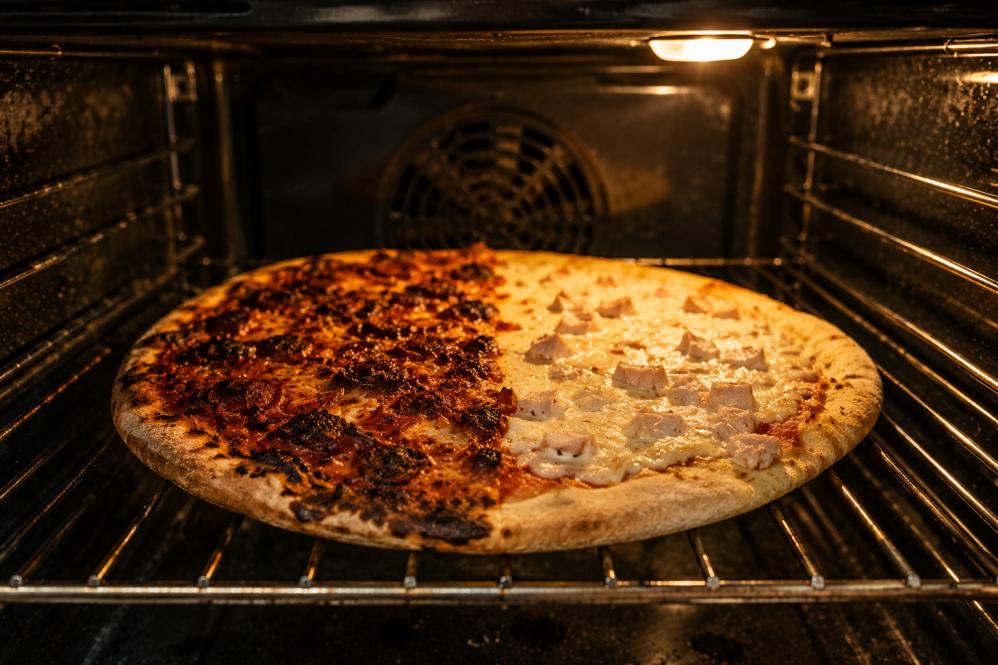
If your meals are suddenly cooking unevenly, the oven itself may be part of the problem.
You might notice:
- burnt edges
- undercooked centres
- trays needing constant rotation
- longer cooking times
- inconsistent baking results
People often assume the appliance is simply getting old, but heavy grease buildup can interfere with heat circulation and airflow inside the oven. Modern ovens rely on proper airflow to distribute heat evenly.
Why Oven Cleanliness Matters
Modern ovens rely on consistent airflow to distribute heat evenly. When grease and carbon buildup collect around fans and internal surfaces, the oven may struggle to maintain proper heat flow.
This is particularly noticeable in fan-forced ovens where airflow plays a major role in cooking performance.
Read our article “Here” about the health effects of a dirty oven
The Change Happens Gradually
Because the decline is usually slow, many people simply adapt without realising how much performance has changed over time.
After a professional clean, many homeowners notice the oven feels fresher, cleaner, and more consistent during cooking.
4. Your Smoke Alarm Keeps Going Off
There’s nothing more frustrating than the smoke alarm blasting halfway through dinner.
In many homes, the food itself isn’t even the problem. The real culprit is old grease and carbon deposits burning inside the oven.
This becomes especially common when:
- grilling food
- roasting meat
- preheating the oven
- cooking at higher temperatures
Why Dirty Ovens Trigger Smoke Alarms
As the oven temperature rises, thick layers of grease begin smoking almost immediately.
That smoke escapes into the kitchen and quickly sets alarms off.
Many homeowners assume the smoke alarm is too sensitive, but if it mainly happens while using the oven, the oven itself is often the issue.
It Creates Unnecessary Stress
Constant smoke alarms can make cooking frustrating and embarrassing, especially when guests are over or children and pets become distressed by the noise.
A clean oven should not regularly fill the kitchen with smoke during ordinary cooking.
5. The Oven Door Is Brown, Cloudy, or Sticky
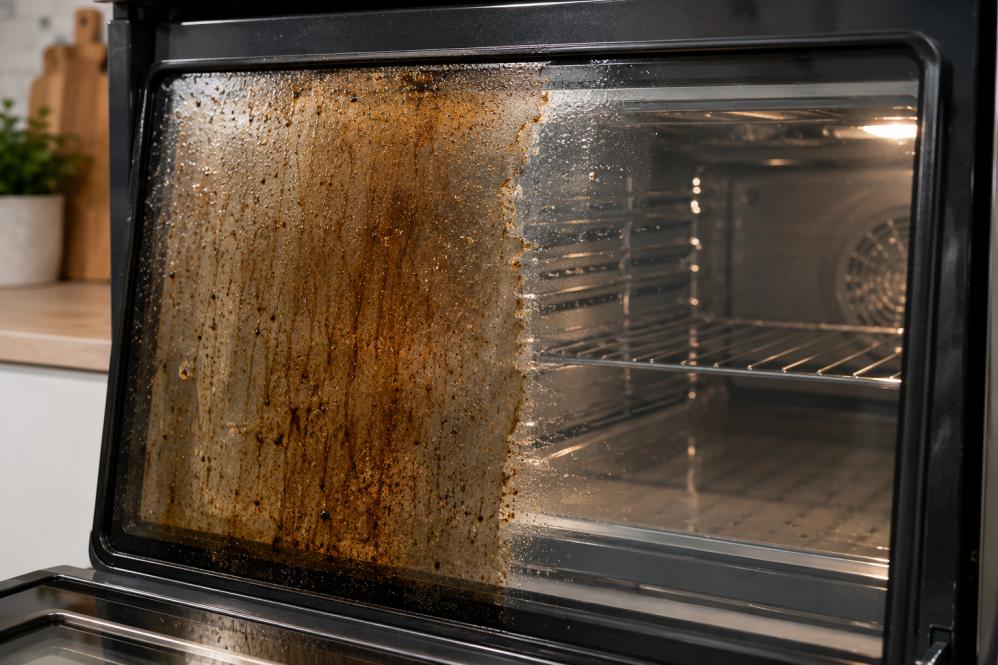
The oven door often tells the real story about how dirty the appliance has become.
Over time, grease vapour sticks to the glass and slowly bakes onto the surface.
Eventually the glass becomes:
- cloudy
- brown or yellow
- streaky
- sticky
- difficult to see through
For many people, checking food eventually means opening the oven door because visibility through the glass is almost gone.
Grease Often Builds Up Between the Glass Panels
Modern ovens commonly have multiple glass layers, and grease can collect between them as well.
This surprises many homeowners because they clean the outer glass regularly but still can’t get the door looking clear.
Professional cleaning often involves carefully accessing areas ordinary household cleaning cannot properly reach.
A Clean Door Changes the Whole Kitchen
A properly cleaned oven door can make the entire appliance look dramatically newer and fresher again.
6. Cleaning It Yourself Feels Impossible
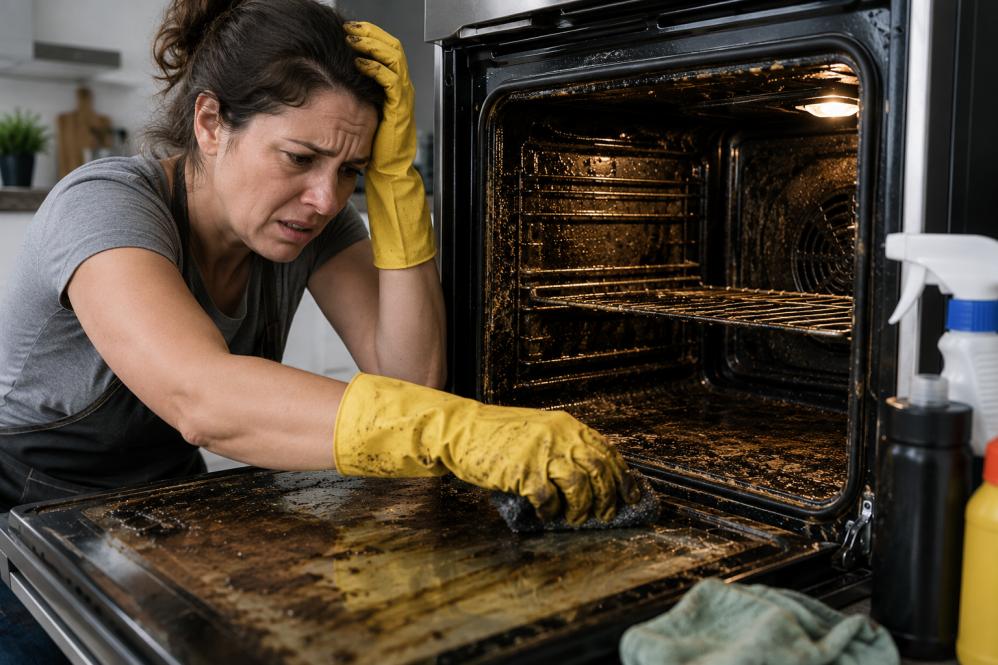
Most people eventually reach the same point.
They spray supermarket oven cleaner everywhere, scrub furiously for an hour, and realise the grime still barely moves.
Oven cleaning is one of the most difficult household cleaning jobs because the buildup has often been repeatedly baked onto surfaces for years.
Why DIY Cleaning Becomes So Frustrating
Fresh grease is relatively easy to remove. Hardened carbon buildup is another story entirely.
Once grease has been repeatedly heated over long periods, it turns into stubborn black deposits that cling tightly to metal and glass.
This is why many DIY cleaning attempts involve:
- endless scrubbing
- strong chemical smells
- sore arms
- disappointing results
Self-Cleaning Functions Aren’t Always Enough
Many modern ovens include self-cleaning features, but they don’t always leave the appliance spotless.
Areas like:
- racks
- trays
- glass
- seals
- door edges
often still require manual attention afterwards.
When cleaning starts feeling impossible, it’s usually a strong sign the oven needs a deeper professional clean.
7. You Can See Thick Black Carbon Buildup
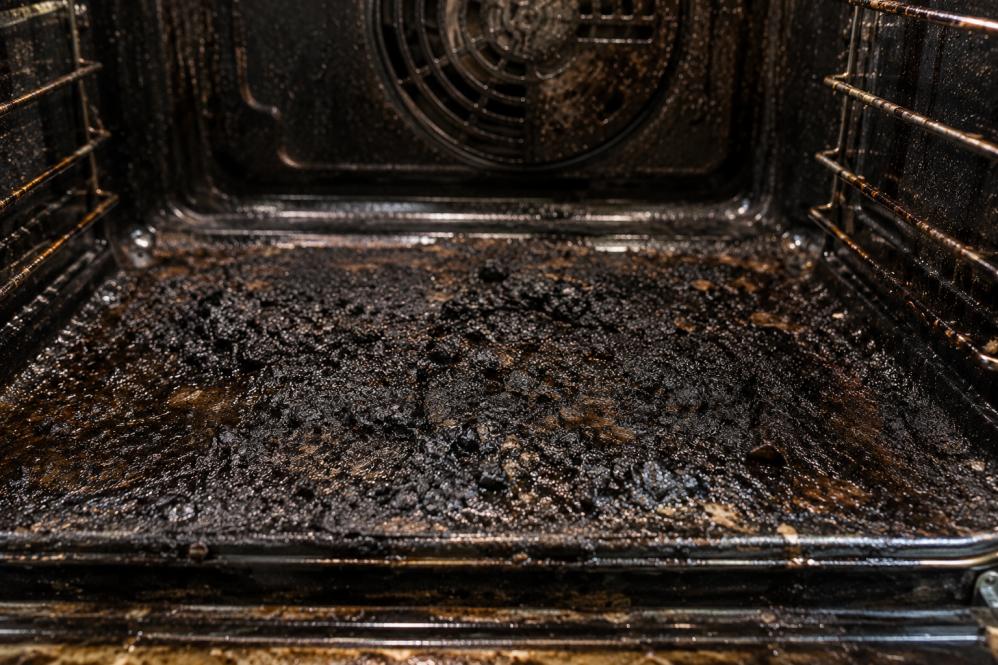
Visible black carbon buildup is usually a sign the oven is well overdue for proper cleaning.
This thick crusted residue commonly appears:
- on oven floors
- around fan covers
- near heating elements
- on racks
- inside corners
- around hinges and edges
Carbon forms when grease and food residue repeatedly burn and harden over time.
Why Carbon Buildup Matters
Heavy carbon deposits don’t just look unpleasant.
They can also:
- create smoke
- produce strong smells
- affect heat circulation
- flake into food
- become increasingly difficult to remove
At this stage, ordinary household cleaning products usually make very little difference.
The Longer It’s Left, the Worse It Gets
Carbon buildup tends to compound over time. The longer it’s ignored, the harder the cleaning process becomes.
Why Professional Oven Cleaning Makes Such a Difference
Professional oven cleaning is usually far more detailed than an ordinary household clean.
Rather than simply wiping visible surfaces, deep cleaning focuses on removing:
- baked-on grease
- carbon buildup
- hidden grime
- stained glass residue
- stubborn grease deposits
The goal is not only improving appearance but also restoring the oven to a cleaner, fresher, more enjoyable condition to use.
Final Thoughts
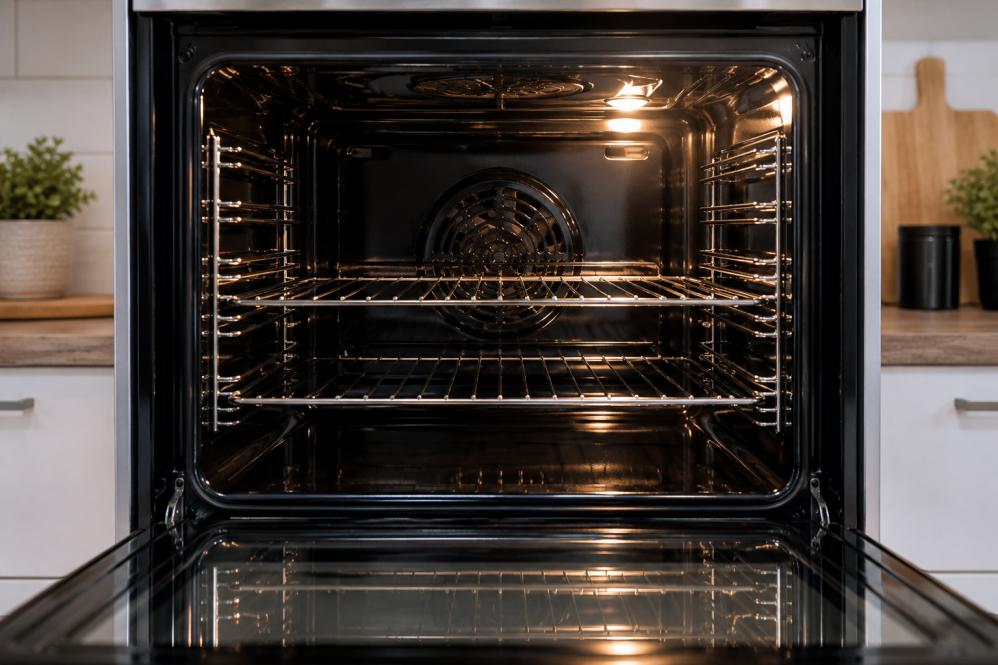
A dirty oven rarely becomes filthy overnight. The buildup happens gradually, which is why many homeowners don’t realise how serious the problem has become until the smoke, smells, and grime become impossible to ignore.
If your oven:
- smokes regularly
- smells burnt
- cooks unevenly
- triggers smoke alarms
- has cloudy glass
- feels impossible to clean
- contains visible carbon buildup
then it’s probably overdue for a proper professional clean.
A professionally cleaned oven can make cooking feel far more enjoyable again while helping reduce smoke, smells, grease buildup, and frustration in the kitchen.