
Let’s be honest — almost nobody enjoys cleaning their oven.
It’s one of those jobs people avoid until the kitchen starts smelling like burnt sausages every time the oven heats up. You tell yourself you’ll clean it “next weekend,” then suddenly six months have passed and the inside of the oven looks like a coal mine with a light bulb in it.
The funny thing is most heavy oven grime doesn’t happen overnight.
Professional oven cleaners see it all the time. One household cooks every day and their oven still looks fairly decent. Another oven, same age, same amount of use, looks like someone’s been deep-frying engine parts inside it since 1997.
The difference usually comes down to a few simple habits.
A lot of people don’t realise ovens slowly build layers of grease and carbon from tiny spills, cooking oils, smoke, bubbling dishes, and food splatter. Every time the oven heats up again, those little messes bake harder and harder until they become stubborn black carbon that could probably survive a nuclear event.
The good news? Keeping your oven cleaner for longer is actually easier than most people think.
You don’t need to spend your Saturday inhaling supermarket oven cleaner fumes strong enough to remove your fingerprints. A few small changes can massively reduce grease build-up, smoke, burnt smells, and those terrifying moments where the smoke alarm goes off because someone cooked frozen chips.
Here are 12 genuinely useful oven cleaning tips that can help keep your oven cleaner, fresher, and working better for much longer.
1. Use Fan-Forced Cooking More Often
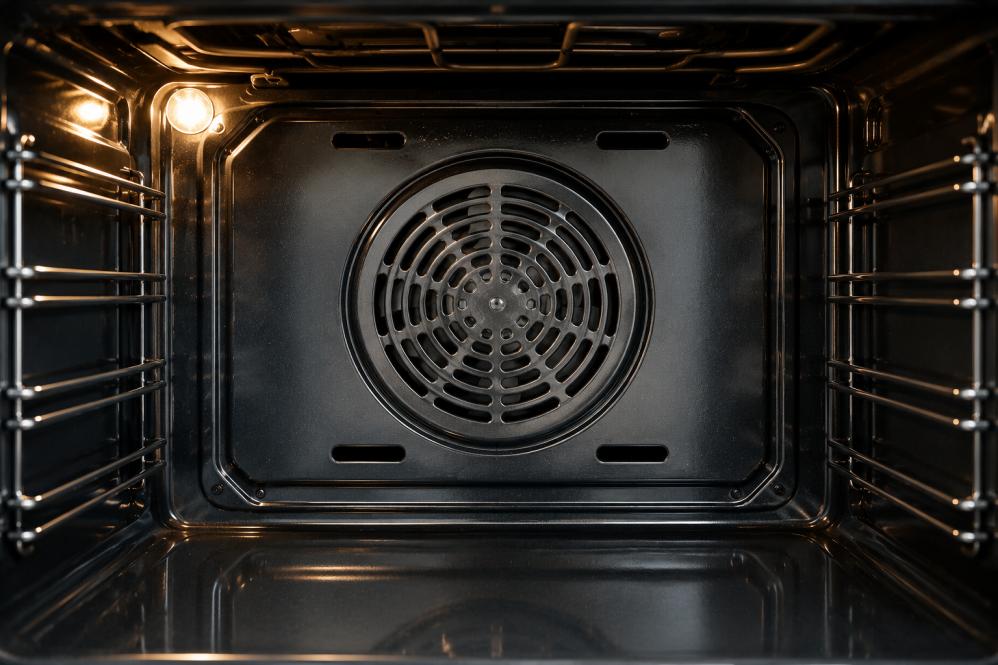
One of the easiest ways to keep your oven cleaner for longer is simply using the fan-forced setting more often.
A lot of people just use whichever oven setting they’ve always used without thinking much about it. But certain settings actually create far more grease splatter and baked-on grime inside the oven.
Grill settings and direct top heat are usually the worst offenders. Foods like:
- Bacon
- Sausages
- Roast meats
- Marinated chicken
can spray tiny grease particles all around the inside of the oven while cooking. You usually don’t notice it happening at the time, but over weeks and months that oily mist slowly sticks to:
- The oven roof
- Glass door
- Fan area
- Side walls
- Grill section
Eventually it hardens into thick black carbon build-up that becomes an absolute pain to clean later.
Why Fan-Forced Cooking Helps
Fan-forced cooking circulates heat more evenly around the oven, which usually means:
- Less aggressive grease splatter
- More even cooking
- Less smoke build-up
- Cleaner oven glass over time
It can also help food cook a little quicker and more consistently.
Professional oven cleaners can often tell which cooking settings people mainly use just by looking at the grease patterns inside the oven. Sounds odd, but it’s true.
No oven stays perfectly clean forever, especially in busy Aussie households where frozen chips at 9pm become a personality trait.
But using fan-forced cooking more often is one of the simplest ways to reduce grease, smoke, burnt smells, and future oven cleaning headaches.
2. Put a Tray Under Anything That Bubbles
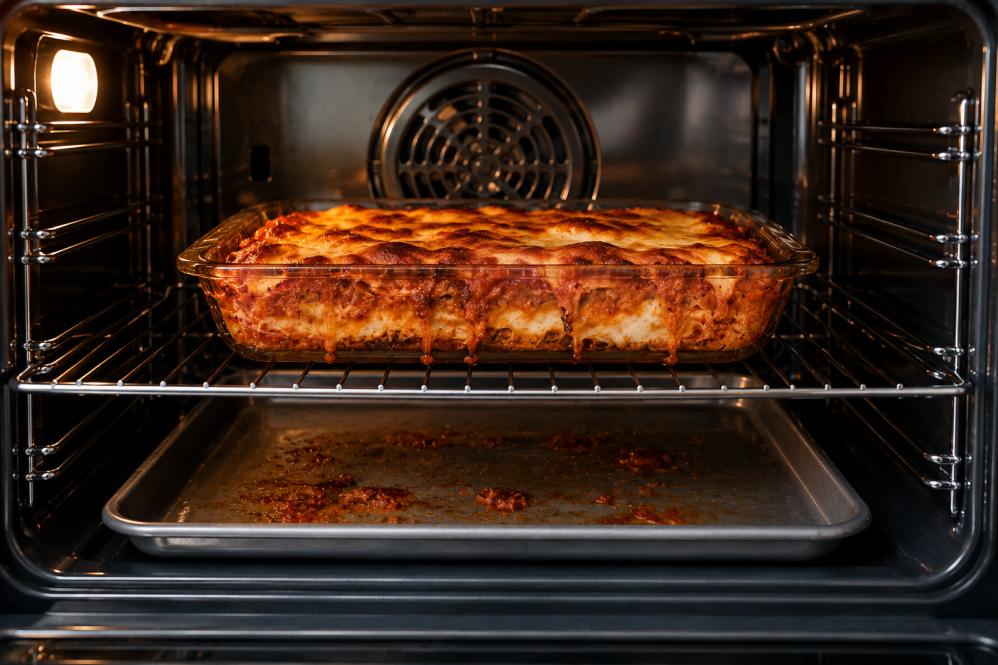
This tiny little habit can save you an unbelievable amount of oven cleaning later.
Foods like:
- Lasagna
- Pasta bakes
- Pies
- Roasts
- Casseroles
- Potato bakes
love to bubble over when cooking. Usually not enough to notice straight away — just a little drip here and there. But those small spills land on the bottom of the oven and immediately start baking onto the surface.
Then the next time you use the oven, they bake harder. And harder.
And eventually you end up with thick black carbon stuck to the oven floor like it’s been welded there by a tradie with anger issues.
Why It Becomes Such a Problem
Most major oven smoke problems actually start from old food spills sitting on the oven floor.
Every time the oven heats up, those old drips burn again, creating:
- Smoke
- Burnt smells
- Greasy residue
- Carbon build-up
This is especially common with cheesy dishes and anything oily or sugary.
The Simple Fix
Before cooking messy dishes, place a cheap baking tray on the shelf underneath. That’s it.
The tray catches the overflow before it reaches the bottom of the oven, which massively reduces baked-on grime and future scrubbing.
Professional oven cleaners see this constantly — ovens destroyed by years of tiny spills people never noticed.
Meanwhile, the smart households quietly slide a tray underneath and save themselves hours of misery later. Simple trick. Massive difference.
3. Stop Nuking Your Oven With Harsh Chemicals
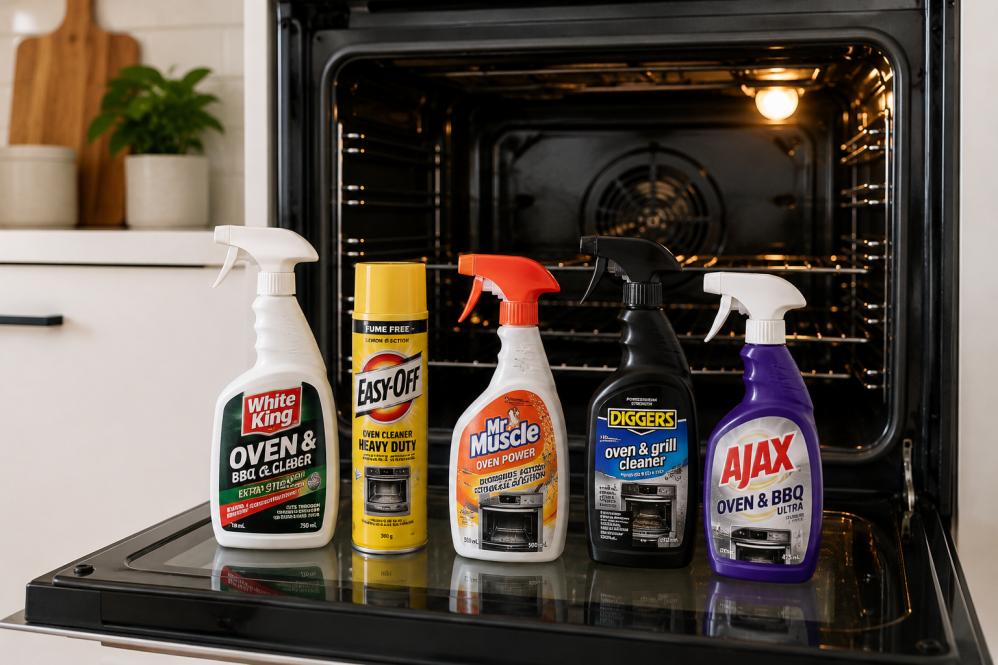
A lot of people think the stronger the oven cleaner smells, the better it must work.
If your eyes are watering, your lungs are questioning life choices, and the dog’s left the kitchen entirely… surely it’s doing something productive, right? Not always.
Some supermarket oven cleaners are incredibly harsh and can actually do more damage than people realise when used too often.
The Problem With Heavy Chemical Cleaners
Repeated use of strong oven cleaning sprays can sometimes:
- Damage oven liners
- Dry out rubber door seals
- Stain surfaces
- Affect protective coatings
- Leave lingering chemical smells behind
Some people spray their oven like they’re trying to remove industrial paint, then wonder why the kitchen smells strange every time the oven heats up afterward.
The other issue is many harsh chemicals only soften the top layer of grease. Underneath, the baked-on carbon often still remains, meaning people end up scrubbing aggressively anyway.
A Better Approach
For general oven maintenance, regular light cleaning is usually far better than occasional chemical warfare.
A simple warm wipe-down done regularly prevents grease from building into thick carbon in the first place. That means:
- Less smoke
- Less scrubbing
- Less chemical use
- Less damage risk
Professional oven cleaners often use specialised products designed specifically for ovens, not just generic supermarket sprays that could probably strip paint off a ute.
Your oven doesn’t need to survive a chemical attack every few months. Usually, it just needs a bit of consistent care before things get out of hand.
4. Wipe Small Spills While the Oven Is Warm
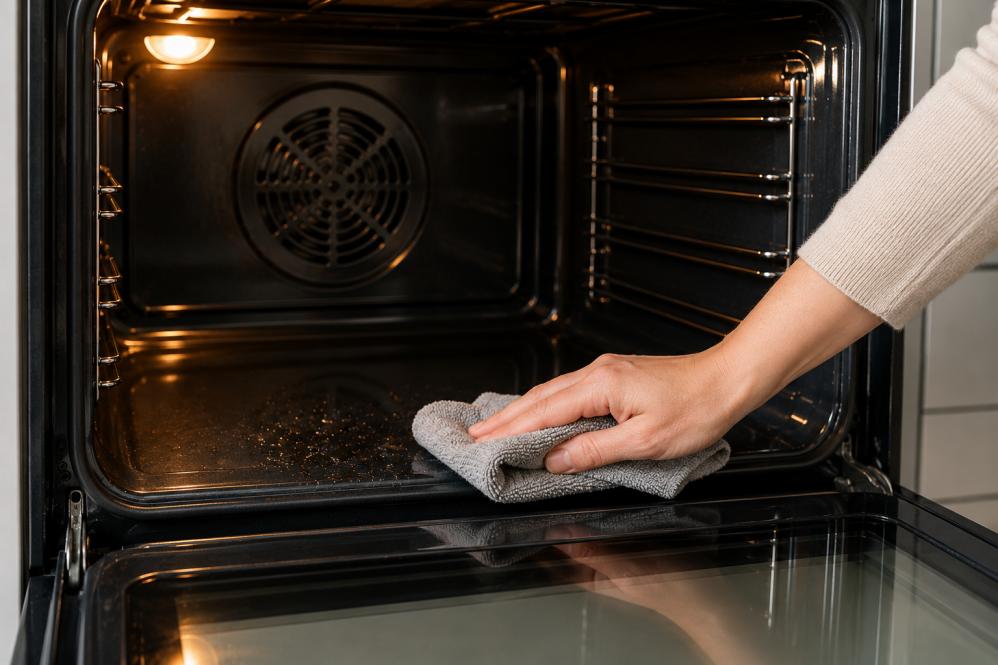
This is probably the biggest difference between ovens that stay reasonably clean and ovens that eventually look like a burnt cave inside.
The trick is simple: Clean tiny spills while the oven is still slightly warm.
Not scorching hot where you lose fingerprints trying to touch the tray. Just warm enough that grease and food residue haven’t hardened yet.
Why This Works So Well
Fresh spills are easy.
Once grease, cheese, sauces, and food drips go through multiple cooking cycles, they slowly bake into thick carbon deposits that become incredibly difficult to remove later.
That little blob of melted cheese you ignored today becomes tomorrow’s smoking black crust welded onto the oven floor.
And every time the oven heats up again, it burns harder and smells worse.
What Most People Don’t Realise
A lot of major oven cleaning problems actually start from tiny spills people barely noticed:
- A bit of bubbling lasagna
- Fat from a roast
- Cheese dripping off garlic bread
- Pie filling overflow
- Marinade splatter
Small messes become big oven cleaning jobs over time.
The Easy Habit That Saves Hours Later
After cooking, wait until the oven cools slightly, then give obvious spills a quick wipe with a damp cloth or paper towel.
Even two minutes of maintenance can help:
- Prevent carbon build-up
- Reduce smoke
- Keep oven smells fresher
- Stop grease hardening onto surfaces
Professional oven cleaners see it constantly — ovens ruined not by one giant mess, but by hundreds of tiny spills ignored for months.
A quick wipe now is far easier than chiselling away burnt carbon later while muttering bad words under your breath.
5. Uncovered Roasts Are Basically Grease Cannons
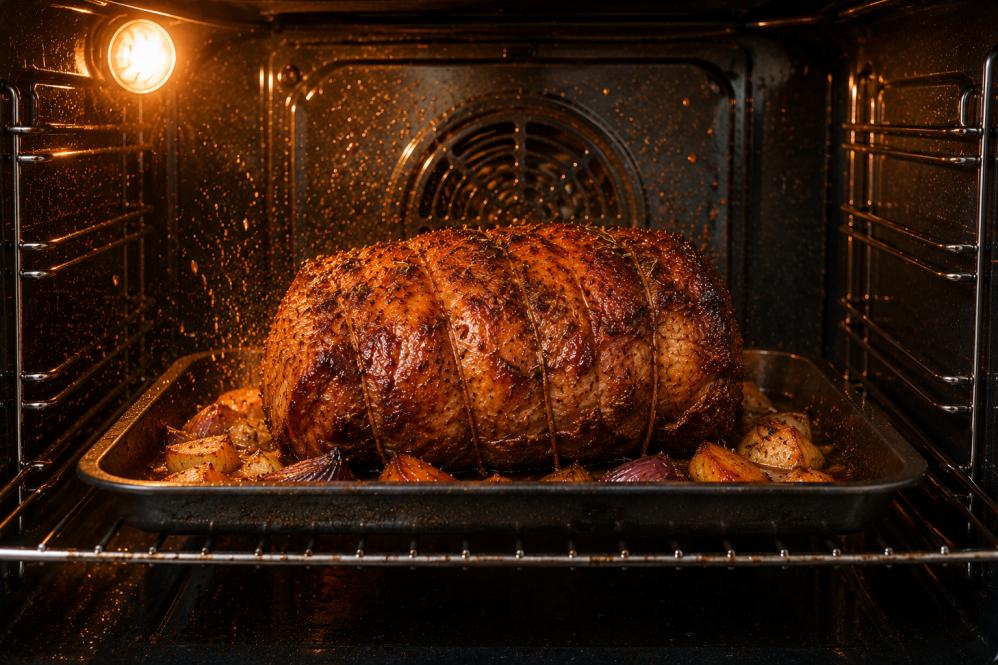
Aussies love a good roast.
Roast pork, roast lamb, roast chook, potatoes swimming in oil — beautiful stuff. But here’s the problem most people never think about:
Every uncovered roast is quietly blasting grease around the inside of your oven like a tiny edible explosion.
What Actually Happens During Roasting
When fatty meats cook at high temperatures, they release a fine oily mist into the hot air inside the oven.
You usually only notice the mess left in the roasting tray, but meanwhile grease has coated:
- The oven roof
- Door glass
- Side walls
- Grill area
- Fan section
Over time that sticky residue hardens into thick brown grime and eventually turns into black carbon build-up.
That’s when ovens start:
- Smoking heavily
- Smelling burnt
- Leaving greasy residue on glass
- Setting off smoke alarms during frozen chips night
Why Roasts Create So Much Build-Up
Roasting often combines:
- High heat
- Long cooking times
- Fatty meats
- Bubbling oils
which is basically the perfect recipe for oven grime. And pork crackling? Delicious. But it absolutely sprays grease everywhere.
Simple Ways To Reduce The Mess
You don’t have to stop making roasts — that would be un-Australian.
But you can reduce oven grease by:
- Using roasting lids occasionally
- Lowering temperatures slightly
- Cleaning splatter sooner rather than later
- Using deeper roasting trays
Professional oven cleaners can usually spot a “roast-heavy household” instantly. The oven gives it away long before the owners do.
6. Baking Paper Is Criminally Underrated
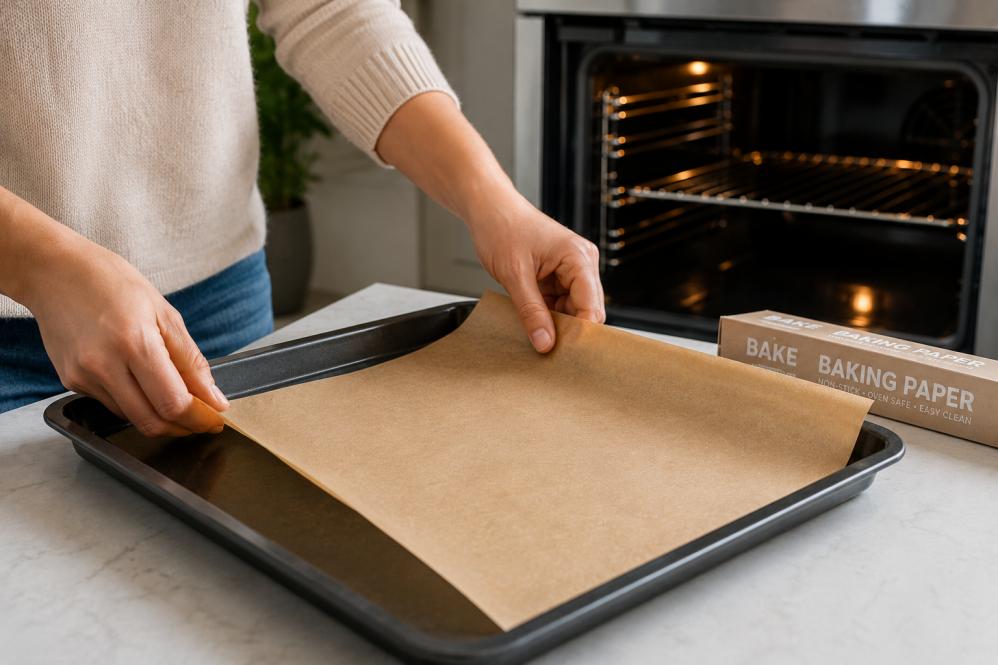
If there were a Hall of Fame for preventing oven mess, baking paper would be sitting front row with a beer in hand.
Most people only pull it out for cakes or biscuits, but honestly, baking paper is one of the easiest ways to keep your oven cleaner for longer.
And yet half the country seems determined to cook directly on trays like they enjoy scrubbing burnt cheese for entertainment.
What Baking Paper Actually Prevents
Baking paper catches:
- Melted cheese
- Grease
- Oils
- Marinades
- Burnt crumbs
- Sauce drips
before they bake onto trays and eventually end up carbonising inside the oven. It works brilliantly under:
- Frozen chips
- Pizza
- Garlic bread
- Pastries
- Sausage rolls
- Fish
- Chicken wings
Basically anything capable of leaking, bubbling, or turning into a greasy disaster.
Why This Matters For Oven Cleaning
Most oven grime starts small.
A few crumbs here. A drip of oil there. Melted cheese escaping from a pizza like it’s trying to flee the country.
Then the oven heats up again and those little spills burn harder each time until they become stubborn black carbon.
Using baking paper massively reduces how much mess actually reaches the oven itself.
The Best Part?
It’s cheap. That’s what makes it funny.
People spend hundreds on oven cleaning products while ignoring the $3 roll of baking paper quietly sitting in the kitchen drawer capable of preventing half the mess in the first place.
Small habit. Huge difference.
7. Don’t Use the Bottom of the Oven Like a Bin Lid
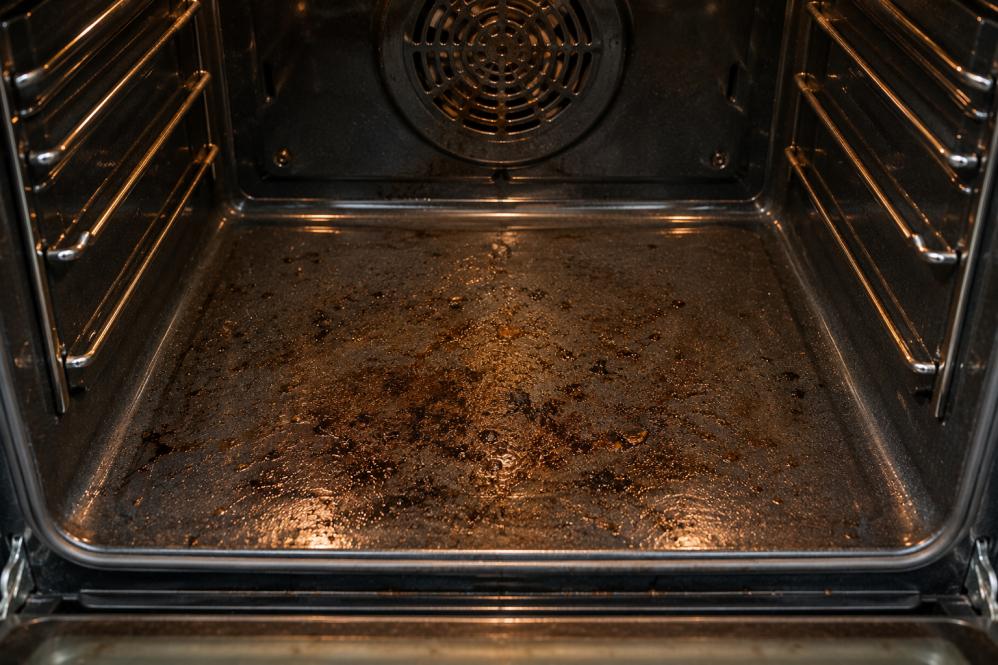
A surprising number of people line the bottom of their oven with foil thinking they’ve discovered some sort of cleaning life hack.
“Beauty,” they think. “Now all the grease lands on this instead.”
Unfortunately, ovens weren’t really designed for that. And in a lot of cases, it actually creates more problems than it solves.
Why It’s A Bad Idea
Modern ovens rely on proper airflow to circulate heat evenly.
When you cover the oven floor with foil, trays, or random makeshift grease catchers, it can:
- Disrupt airflow
- Cause uneven cooking
- Trap excessive heat
- Increase smoke
- Create more grease build-up in certain areas
In some ovens, foil can even damage the enamel surface underneath or affect how the oven heats.
Professional oven cleaners see this constantly — ovens with strange burn patterns, warped foil stuck to the base, or thick grease baked around homemade foil liners that haven’t moved since the last federal election.
What To Do Instead
If you’re cooking something messy, place a tray on a lower shelf underneath the dish instead.
That catches spills without interfering with airflow or damaging the oven floor.
And if something does spill onto the base of the oven, wiping it up while it’s still fresh is far easier than letting it bake there for six months until it develops its own postcode.
The Simple Truth
The bottom of your oven isn’t meant to be a permanent grease collection tray.
It’s an oven — not the kitchen equivalent of a ute tray lined with aluminium foil and regret.
8. The Grill Is Usually the Real Villain
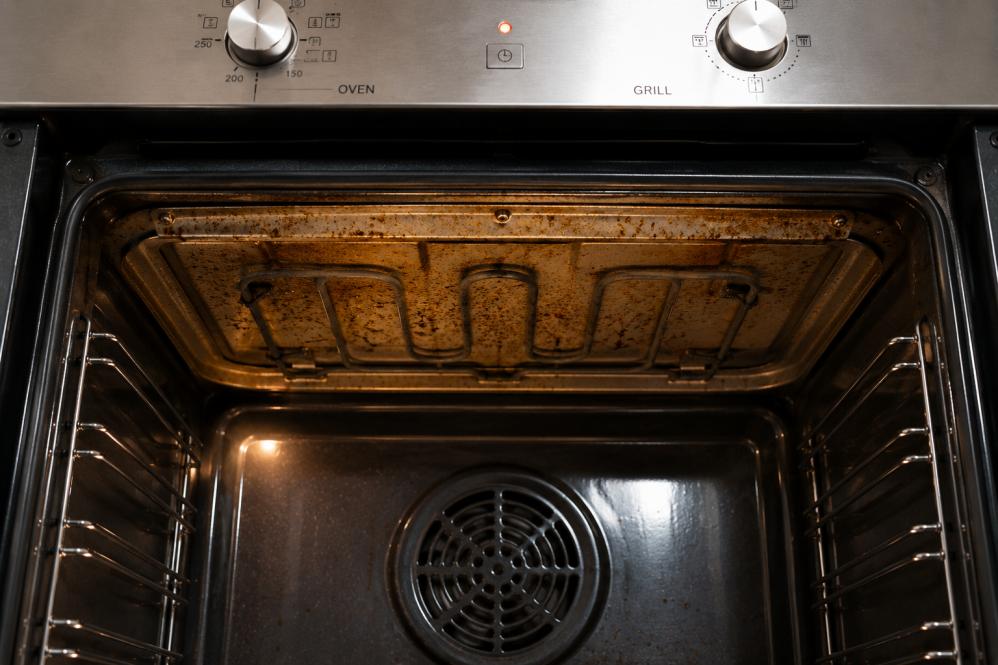
When an oven starts smoking badly, most people immediately blame the bottom of the oven.
They start scrubbing the floor, attacking old crumbs, and wondering why the smoke still hasn’t disappeared.
Meanwhile, the real problem is usually sitting up the top quietly covered in years of old grease.
The grill section is very often the biggest culprit in a smoky oven.
Why The Grill Gets So Dirty
The grill area cops extreme heat, especially when cooking things like:
- Bacon
- Sausages
- Steaks
- Cheese toasties
- Garlic bread
- Crispy pork
Every time grease splatters near the grill element, it gets baked almost instantly onto the metal surfaces above.
Then the next time you use the grill, all that old grease reheats and starts smoking again.
That’s why some ovens smell like a bushfire every time the grill turns on, even if the rest of the oven doesn’t look too bad.
The Sneaky Build-Up Most People Miss
The worst part is the grill section is harder to see and awkward to clean, so it often gets ignored completely.
Over time, thick greasy residue builds around:
- The grill element
- Upper roof panels
- Vents
- Corners near the top of the oven
Professional oven cleaners often find the heaviest carbon build-up sitting right near the grill.
A Simple Habit That Helps
If you regularly use the grill, giving the upper section a quick wipe every now and then can massively reduce:
- Smoke
- Burnt smells
- Greasy residue
- Future carbon build-up
Because in many ovens, the grill isn’t just part of the problem. It’s the entire crime scene.
9. Clean the Oven Racks Separately
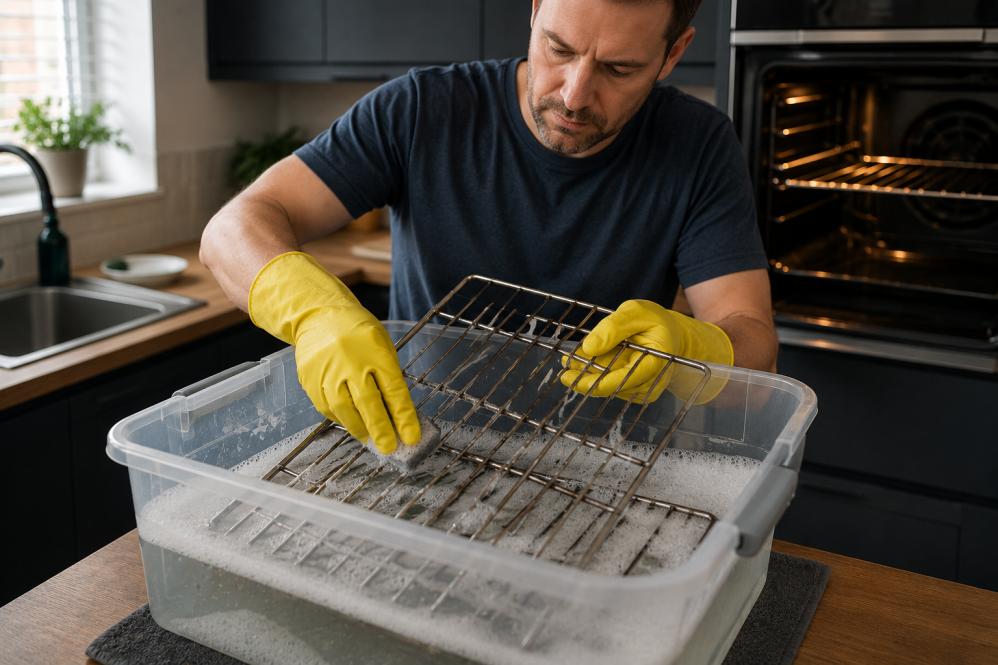
Oven racks are one of the most forgotten parts of the entire oven.
Most people focus on the oven floor, the glass, or the obvious burnt mess — meanwhile the racks are quietly sitting there coated in years of baked-on grease and old cooking oils.
Because they’re still technically “metal,” people often don’t realise how filthy they’ve actually become.
Why Dirty Racks Cause Problems
Every time the oven heats up, old oils and grease stuck to the racks heat up too. That can create:
- Smoke
- Burnt smells
- Greasy air inside the oven
- Sticky residue spreading around while cooking
Over time the racks collect layers of carbon, especially around:
- The joins
- Wire corners
- Edges
- Sliding sections
And once that grime hardens properly, it becomes incredibly difficult to remove.
The Mistake Most People Make
A lot of homeowners try cleaning the entire oven while leaving the racks sitting inside the whole time.
That’s like washing your car but leaving mud-covered floor mats sitting on the seats.
The racks should really be cleaned separately every few months.
What Helps
Simple things like:
- Soaking racks in hot water
- Using degreaser carefully
- Scrubbing before grease hardens too much
- Wiping spills sooner rather than later
can massively reduce future build-up.
Professional oven cleaners often notice that once the racks are properly cleaned, the whole oven smells fresher and smokes less.
It’s one of those little jobs people put off forever… right up until the racks start looking like they were recovered from a shipwreck.
10. A Dirty Oven Can Affect Food Taste

A lot of people think a dirty oven is only a cosmetic problem. Bit of grease. Bit of smoke. She’ll be right.
But here’s something many homeowners don’t realise: Old grease and burnt carbon inside the oven can actually affect the taste and smell of your food. Especially lighter foods.
It can also be bad for your health.
How It Happens
Every time the oven heats up, old baked-on grease starts warming again too.
That releases smoke, oily vapours, and burnt smells into the hot air circulating around your food.
Heavier foods like roasts might hide it a bit, but lighter foods can absorb those smells surprisingly easily, including:
- Cakes
- Muffins
- Pastries
- Bread
- Biscuits
- Pizza bases
Ever had something taste slightly smoky or “off” even though the recipe was fine?
There’s a good chance the oven itself was the problem.
The Real Culprit Is Usually Old Roast Grease
Professional oven cleaners see this constantly.
Years of cooked-on oils and fat slowly build up around:
- The grill section
- Oven roof
- Fan area
- Side walls
- Door glass
Then every time the oven heats up, those old residues cook again alongside your dinner.
Not exactly the secret ingredient people were hoping for.
Why A Cleaner Oven Matters
Keeping the oven cleaner helps:
- Improve food flavour
- Reduce burnt smells
- Lower smoke
- Create more even cooking
- Make the kitchen smell fresher overall
And let’s be honest — nobody wants their cupcakes carrying subtle hints of last month’s roast lamb.
11. Clean the Door Seals Too
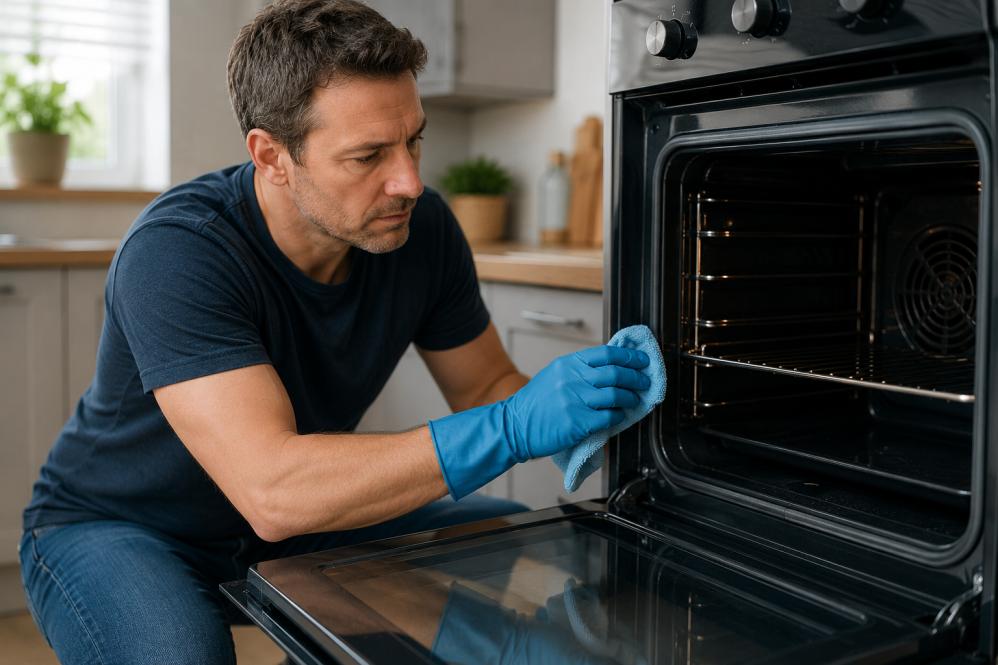
The rubber seal around your oven door is one of the most ignored parts of the entire appliance.
Most people focus on the obvious stuff:
- The oven floor
- Grill section
- Greasy glass
- Burnt trays
Meanwhile the poor old door seal quietly collects grease and grime for years without anyone giving it a second thought.
Why The Door Seal Actually Matters
That rubber seal has an important job. It helps trap heat inside the oven so it cooks properly and efficiently.
When grease and food residue build up around the seal, it can stop the door closing as tightly as it should. That can lead to:
- Heat escaping
- Longer cooking times
- Poor cooking performance
- More grease circulation
- Extra mess around the oven door
Over time, heavy grease can also dry out or damage the rubber itself.
The Sneaky Mess Most People Miss
Door seals are great at trapping tiny bits of:
- Oil splatter
- Crumbs
- Sauce
- Fat residue
especially around the corners and edges. And because it’s not immediately visible, the grime slowly builds up unnoticed.
Professional oven cleaners often find thick sticky grease hiding around seals even when the rest of the oven looks fairly decent.
A Simple Habit That Helps
Giving the seal a gentle wipe during normal kitchen cleaning only takes a minute or two but can help:
- Keep the oven cleaner
- Improve heat efficiency
- Reduce grease build-up
- Extend the life of the seal
It’s a small detail, but ovens are full of those little details people only notice once something starts smoking or not working properly.
12. Tiny Weekly Cleaning Saves Massive Future Headaches
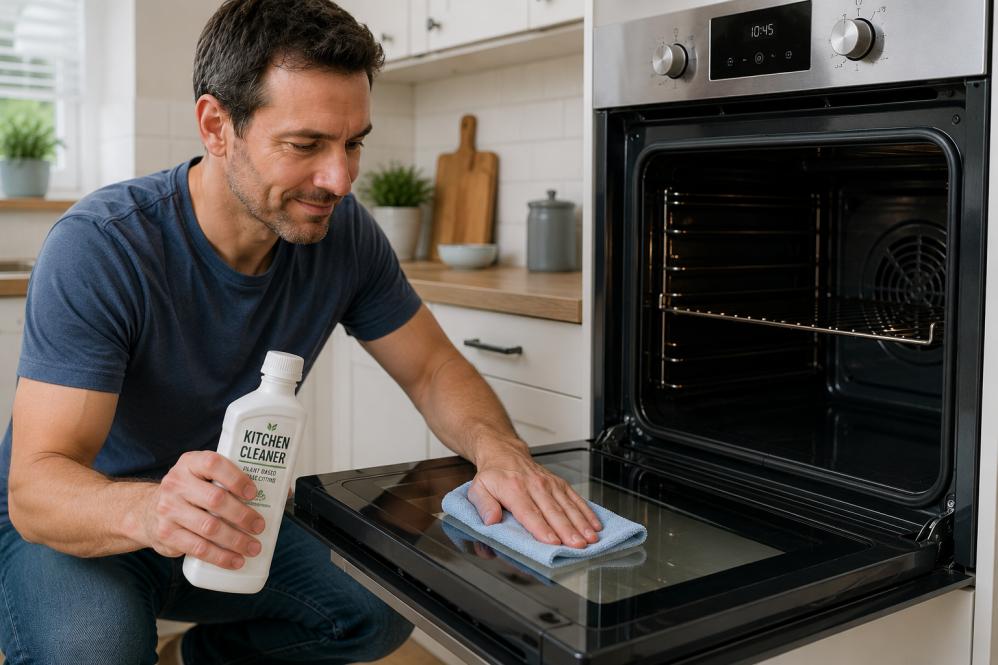
Most filthy ovens don’t become disasters overnight. It happens slowly.
One little cheese drip.
A splash of roast fat.
A bubbling pie overflow.
A few burnt chips rolling off the tray at 10pm after a long day.
Then nobody wipes it up because “I’ll deal with it later.” Six months later the oven’s smoking like an old Holden towing a caravan uphill in summer.
The Big Mistake Most People Make
A lot of homeowners wait until the oven looks absolutely terrible before cleaning it properly. By that stage:
- Grease has hardened
- Carbon has built up
- Smoke smells are stronger
- Scrubbing becomes much harder
- Oven cleaning turns into an all-day punishment session nobody wants to deal with
The truth is tiny maintenance is far easier than giant recovery missions later.
What A Quick Weekly Wipe Prevents
Even just a couple of minutes once a week can massively reduce:
- Burnt smells
- Heavy grease build-up
- Thick carbon deposits
- Oven smoke
- Sticky oven glass
- Future cleaning time
You don’t need to deep-clean the whole oven constantly. Just staying on top of the obvious little messes makes a huge difference over time.
The Professional Cleaner Secret
Professional oven cleaners see it constantly — ovens ruined not by one major spill, but by hundreds of tiny spills repeatedly baked into the surfaces over months or years.
Small regular cleaning keeps ovens:
- Cooking better
- Smelling fresher
- Looking cleaner
- Easier to maintain long term
Because trust me… wiping a fresh spill today is a lot easier than trying to scrape off something that’s been carbonising since the last cricket season.
Why Regular Oven Cleaning Actually Matters
A clean oven isn’t just about appearances. Heavy grease and carbon build-up can:
- Create smoke
- Cause unpleasant cooking smells
- Affect food flavour
- Reduce cooking efficiency
- Increase fire risk
- Make the oven work harder
A badly neglected oven can also shorten the lifespan of seals, fans, and internal components. Regular oven maintenance helps your appliance:
- Cook more evenly
- Heat more efficiently
- Smell fresher
- Last longer
And let’s be honest — cooking dinner is a lot more enjoyable when the kitchen doesn’t smell like burnt oil and regret.
Final Thoughts
Keeping your oven cleaner for longer doesn’t require perfection.
You don’t need to deep-clean it every weekend while wearing rubber gloves and looking like you’re about to investigate a chemical spill.
Most oven cleaning problems come from small messes repeatedly baking onto surfaces over time.
Simple habits like:
- Using baking paper
- Catching spills early
- Cleaning warm surfaces
- Keeping the grill cleaner
- Reducing grease spray
can massively reduce smoke, smells, and heavy carbon build-up.
And if your oven already looks like it’s survived several natural disasters, professional oven cleaning can often restore it far more safely and effectively than harsh DIY chemicals.
Because nobody wants their kitchen smelling like burnt pizza and sadness every time they preheat the oven.