
Most people know when their oven needs cleaning. You open the door, get hit with that burnt grease smell, see smoke rolling out while cooking chips, and suddenly realise the poor thing has probably seen better days.
But here’s where the misunderstanding often happens.
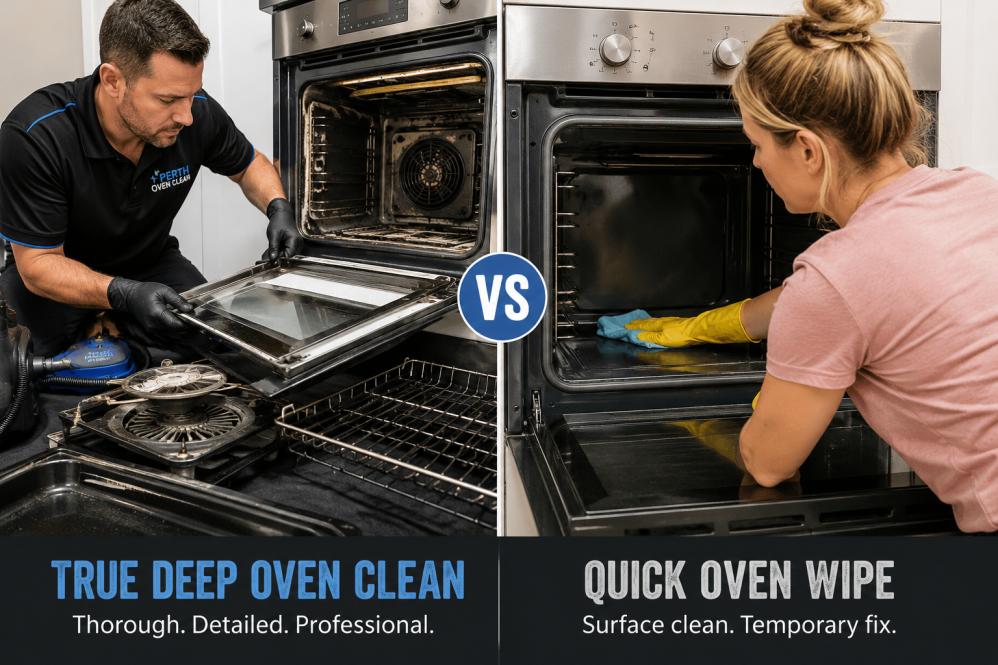
A lot of people think professional oven cleaning is basically someone turning up, spraying a bit of cleaner around, giving it a quick wipe, and heading off into the sunset with a smile and an invoice.
In reality, a proper deep oven clean is a very detailed process. In many cases, it involves partially dismantling sections of the oven, carefully cleaning hidden areas most people never even see, and restoring the appliance as close to new condition as possible.
And yes… there’s usually a fair bit of elbow grease involved too.
If you’ve ever wondered why professional oven cleaning takes time, or what’s actually included in a deep oven clean, this article will give you a proper look behind the scenes.
What Most People Think Oven Cleaning Is
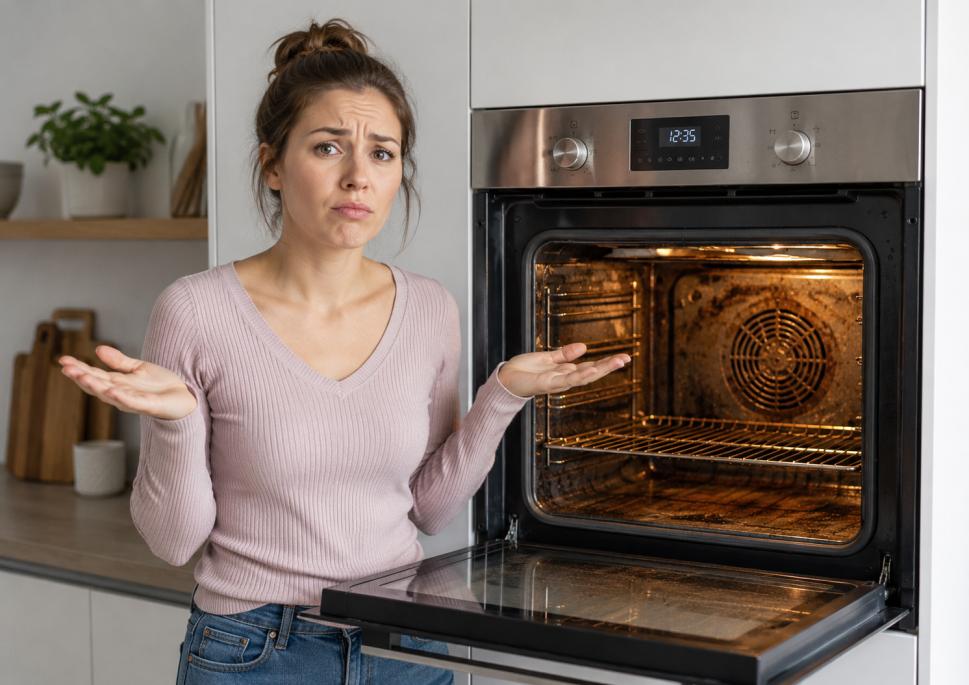
When people picture oven cleaning, they often imagine:
- Spraying some oven cleaner
- Wiping the glass
- Giving the racks a scrub
- Maybe vacuuming a few crumbs
- Job done
And to be fair, that’s probably what many people have done themselves at home over the years.
The problem is that ovens collect grease, carbon, burnt food, oils, smoke residue, and grime in places you simply cannot reach without taking sections apart properly.
That hidden buildup is often what causes:
- Smoke during cooking
- Bad smells
- Poor cooking performance
- Grease dripping
- Excessive heat retention
- Dirty-looking glass between panels
- Stubborn black carbon buildup
A quick wipe might make the oven look cleaner at first glance, but underneath and behind the scenes, there can still be years of grime sitting there quietly plotting against your next roast dinner.
What a True Deep Oven Clean Actually Involves
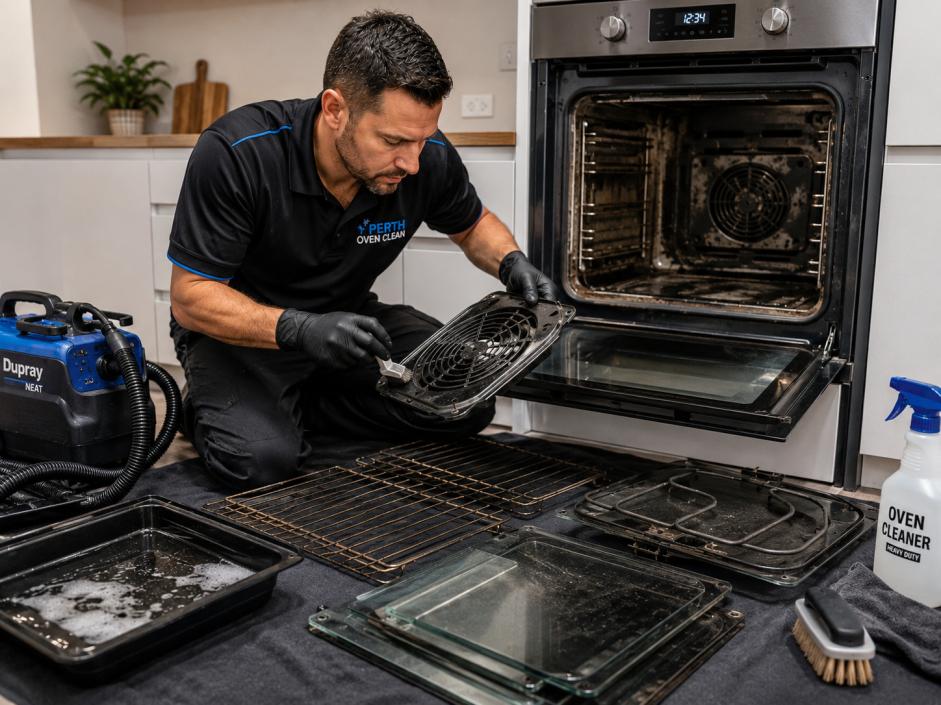
A professional deep oven clean is about cleaning the areas most people either can’t access, don’t know how to clean safely, or simply don’t have the time and equipment to tackle properly.
Every oven is different, but generally speaking, a proper deep clean can involve carefully removing and cleaning multiple components.
Removing the Oven Racks
The racks are usually one of the worst areas for baked-on grease and carbon buildup.
At first glance, they can look beyond saving. Some people even think they need replacing.
In many professional oven cleaning jobs, the racks are soaked in specialised cleaning solutions designed to break down grease and burnt-on residue safely.
At Perth Oven Clean, the racks are soaked in a specialized solution that helps lift years of grime and grease buildup.
Now, to be realistic, there are limits. If carbon has literally fused itself onto stainless steel over years of cooking, there may still be minor marks remaining. But most of the time, the transformation is huge.
It’s often one of those moments where customers say:
“Hang on… those are my racks?”
Cleaning Between the Oven Door Glass
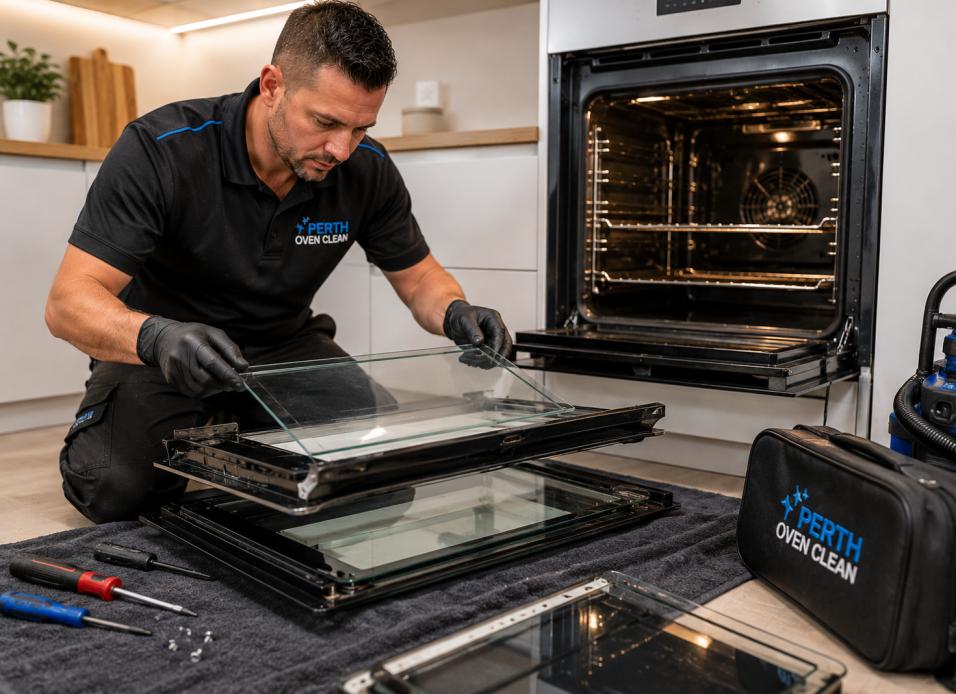
This is one of the biggest things people don’t realise during a deep oven clean.
You know those streaks, grease marks, or cloudy patches trapped inside the oven door glass that you can never seem to reach?
That’s because you usually can’t reach them without removing parts of the door itself.
The Oven Door Often Needs Partial Disassembly
A proper oven clean may involve:
- Removing the oven door
- Carefully separating sections of the glass
- Cleaning between the panels
- Removing trapped grease and residue
- Reassembling everything correctly
This process takes time and care.
And trust us — oven doors are not something you want to force or rush. Some are surprisingly heavy, awkward, and delicate in certain areas.
But once cleaned properly, the difference is massive. Instead of looking cloudy, stained, or greasy, the glass becomes clear again, letting you actually see your food cooking instead of peering through what looks like a fogged-up bus window.
The Hidden Areas Around the Fan
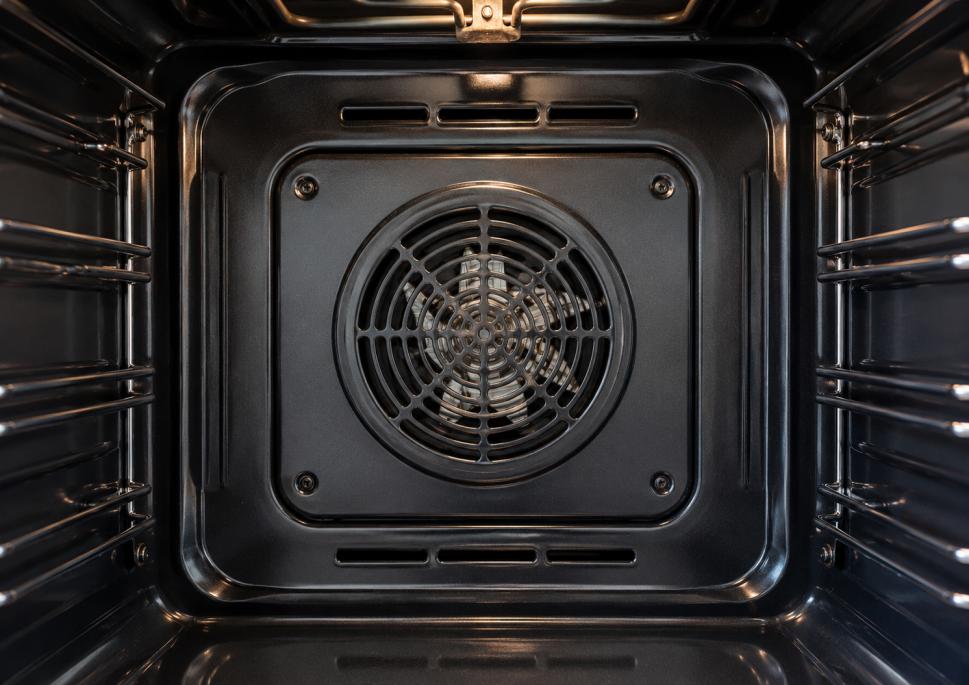
One of the dirtiest areas in many ovens is around the fan section.
This area collects:
- Grease particles
- Burnt oils
- Dust
- Carbon buildup
- Sticky residue
And because hot air circulates through the oven constantly, grime around the fan can affect both smell and cooking performance.
Removing the Fan Where Possible
On many ovens, the fan cover — and sometimes the fan itself — can be carefully removed for cleaning.
This allows access to areas most homeowners never see.
It’s not just about appearance either. Cleaning around the fan can help reduce:
- Burning smells
- Smoke
- Grease circulation
- Uneven cooking
A quick wipe-over simply doesn’t touch these hidden sections properly.
Cleaning Around the Heating Element Safely
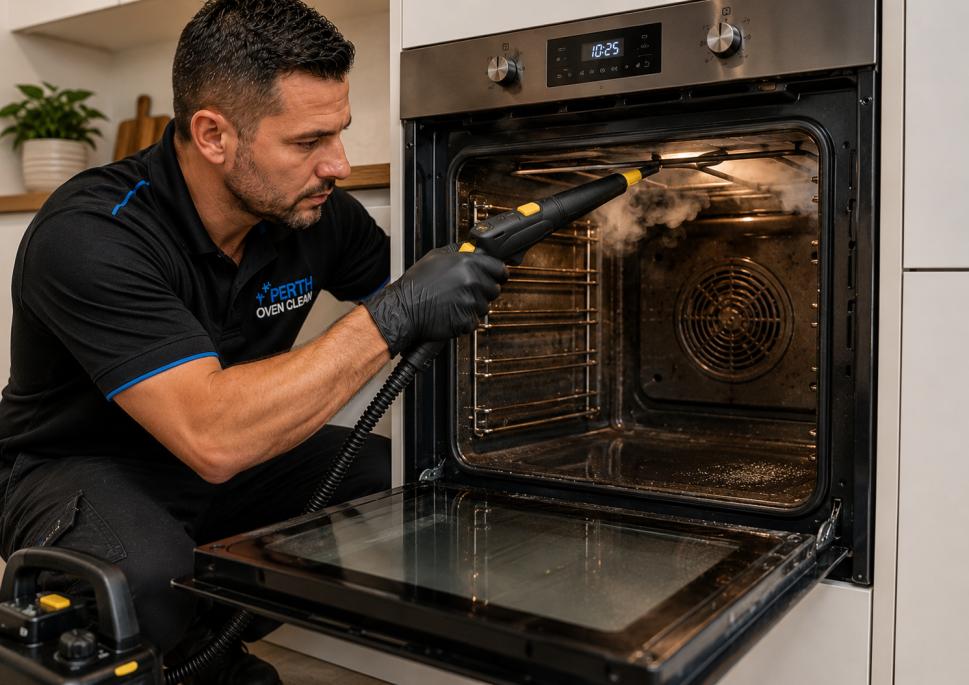
This is where experience matters.
The heating element area needs special care during a professional oven clean.
Many strong oven cleaning chemicals can damage components if used incorrectly or left sitting on sensitive areas.
Why Steam Cleaning Is Often Used Near the Element
Professional oven cleaners often use steam cleaners around the top section of the oven where the element sits.
Steam allows detailed cleaning while reducing the risk of damaging electrical or heating components.
The goal isn’t just to clean aggressively.
The goal is to clean properly and safely.
That means understanding:
- Which products to use
- Where not to use them
- How long products can sit safely
- Which areas require steam instead
- How to avoid damage to finishes and components
There’s actually a fair bit of skill involved in not causing problems while trying to solve them.
Rubber Seals Need Attention Too
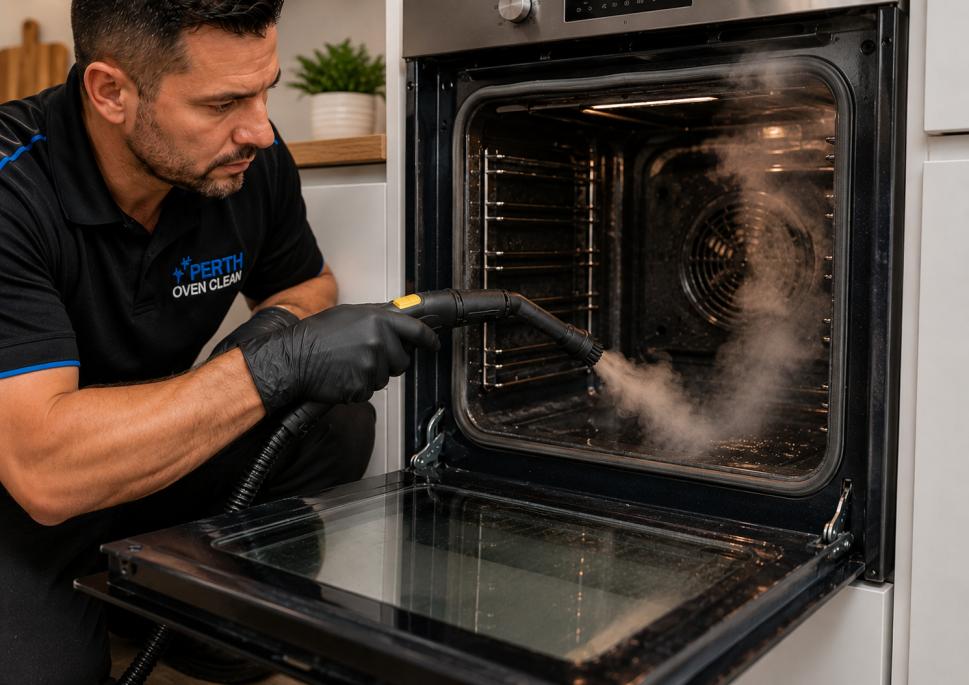
Most people completely forget about the oven seals.
But those rubber seals around the door collect grease, crumbs, oils, and burnt residue over time.
Why Dirty Seals Matter
Dirty or neglected seals can:
- Hold bad smells
- Affect oven efficiency
- Look terrible
- Trap grease
- Become brittle over time
Where possible, seals may be carefully cleaned or removed for more detailed cleaning.
Again, this isn’t something you’d normally do during a basic wipe-down at home.
Why Professional Oven Cleaning Takes So Long
One of the biggest misconceptions is how long a proper oven clean actually takes.
People sometimes imagine a professional oven cleaner being in and out within half an hour.
A true deep oven clean can often take:
- 2 to 3 hours
- Sometimes longer for heavily used ovens
- Even longer for neglected ovens or large freestanding units
And that’s with professional tools, experience, commercial products, and proper equipment.
It’s Not Just Cleaning — It’s Detailed Restoration
There’s a difference between:
- Making something look “a bit better”
and - Properly restoring it
A deep oven clean involves:
- Dismantling sections
- Soaking components
- Scraping carbon buildup
- Degreasing hidden areas
- Cleaning glass panels
- Detailing awkward sections
- Reassembling everything correctly
- Testing components afterwards
That’s why professional oven cleaning is much more than simply “spray and wipe.”
The Equipment Most People Don’t See
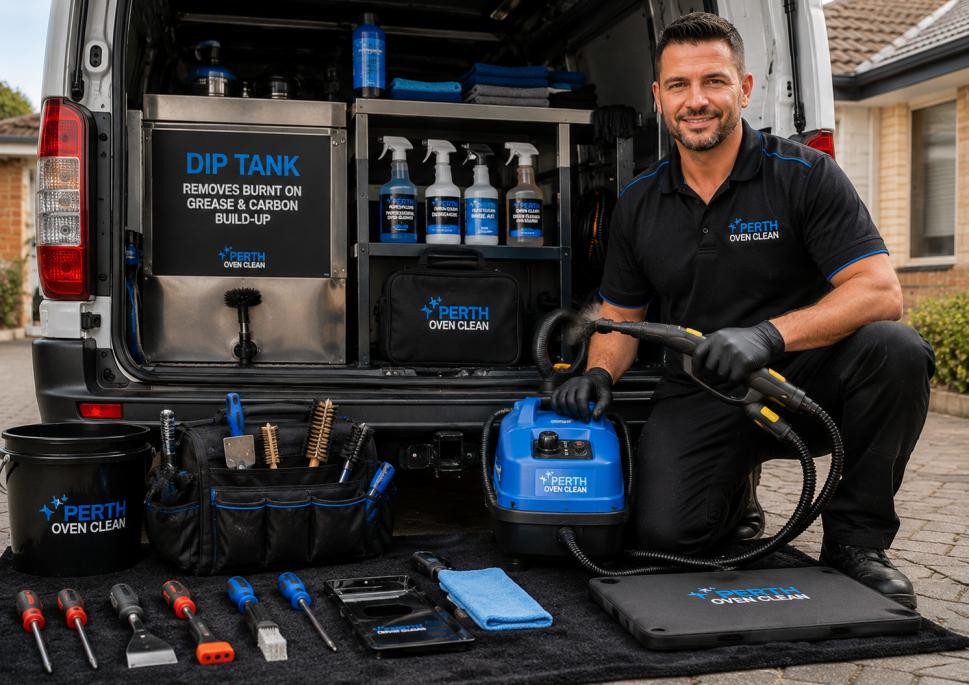
A professional oven cleaning setup usually includes far more than a spray bottle and sponge.
Depending on the job, equipment can include:
- Commercial-grade cleaning solutions
- Steam cleaners
- Non-scratch scrapers
- Detailing brushes
- Special soaking tanks or bags
- Protective equipment
- Microfibre systems
- Degreasing tools
Using the correct equipment helps clean more thoroughly while reducing the risk of damage.
And believe it or not, there’s definitely an art to knowing how aggressive you can safely be on different oven surfaces.
Because once certain finishes are damaged… there’s no magic undo button.
Why DIY Oven Cleaning Often Ends in Frustration
To be fair, there’s nothing wrong with people trying to clean their own oven.
But many homeowners quickly discover that deep oven cleaning is one of those jobs that sounds easier than it actually is.
Common DIY Problems
Some common issues include:
- Harsh chemical smells lingering
- Damaging surfaces accidentally
- Scratched glass
- Streaky finishes
- Oven cleaner residue remaining behind
- Not being able to reach hidden areas
- Spending half the weekend scrubbing racks
And perhaps the biggest one:
- Underestimating how physically messy and time-consuming the job becomes
A lot of people start the job confidently…
Then three hours later they’re covered in grease wondering why they didn’t just call someone in the first place.
A Proper Deep Clean Can Help Extend the Life of Your Oven
Regular deep cleaning doesn’t just improve appearance.
It can also help maintain the oven over time.
Excess grease and carbon buildup can:
- Create smoke
- Cause unpleasant smells
- Affect airflow
- Make the oven work harder
- Increase grime around components
Keeping the oven clean can help it operate more efficiently and make cooking a much nicer experience overall.
And let’s be honest — food just feels slightly more enjoyable when it isn’t being cooked inside something that resembles an active volcano.
What Customers Usually Notice Most Afterwards
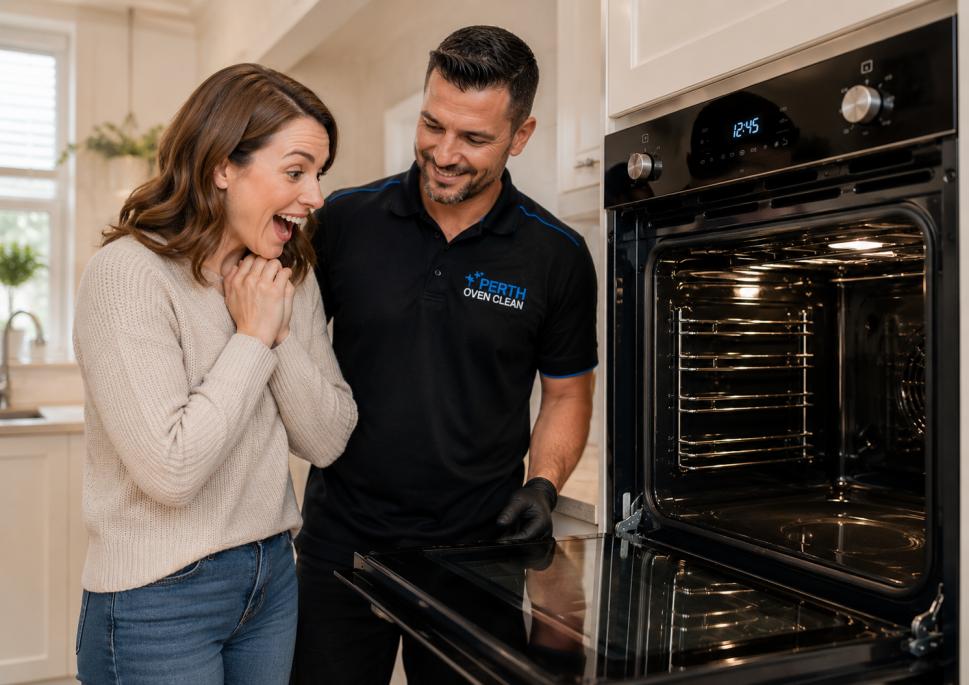
After a professional oven clean, the biggest comments are usually:
“I Didn’t Realise It Could Look Like That Again”
People are often surprised by:
- How clear the glass becomes
- How much brighter the interior looks
- The lack of smoke
- The reduced smell
- How smooth the racks feel again
- The overall “like new” appearance
For many customers, it genuinely feels like getting a new oven without the cost of replacing one.
So, Is Professional Oven Cleaning Worth It?
That depends on what you’re expecting.
If you only want a quick surface wipe, then yes, a deep oven clean may seem excessive.
But if you want:
- A properly detailed clean
- Hidden grime removed
- Grease buildup reduced
- Glass panels cleaned thoroughly
- Components professionally handled
- A much fresher, cleaner oven overall
…then a true deep oven clean is a very different service altogether.
And once people actually see what’s involved behind the scenes, they usually understand why professional oven cleaning takes skill, patience, care, and time.
Read our article before you decide to take on the task yourself.
Frequently Asked Questions About Professional Oven Cleaning
Am I able to take the fan off myself?
Technically, sometimes yes — but whether you should is another story.
Some oven fans are fairly straightforward to remove, while others can be awkward or delicate depending on the brand and model. In some cases, forcing the fan cover or fan blade the wrong way can damage components or strip fittings.
A professional oven cleaner usually knows:
- Which direction fittings undo
- How much pressure is safe
- Which models are more delicate
- How to clean around the fan safely
If you’re unsure, it’s generally better not to force anything. A damaged fan assembly can quickly turn an oven cleaning job into a repair bill.
Does the heating element come out?
Yes, many heating elements can be moved or partially removed.
However, on most ovens it’s not something you want to be bending, pulling, or moving around unnecessarily.
Heating elements can become fragile over time due to constant heating and cooling. Moving them too aggressively can potentially damage them or affect connections.
That’s why professional oven cleaners are usually very careful around the element area. In many cases, steam cleaning is used around the top section of the oven to clean effectively while reducing the risk of damage.
Sometimes the smartest move is knowing what not to touch.
Is it easy to remove the rubber door seals?
If you know how they’re fitted — yes, usually it’s a quick and simple process.
If you don’t know how they’re attached… it can suddenly become a much longer afternoon than expected.
Some seals clip in easily, while others require a bit more care depending on the oven design. Removing them incorrectly can damage clips or stretch the seal.
That’s why professional oven cleaners generally know:
- Which seals are removable
- How they’re fitted
- Which ones are delicate
- How to clean them properly without damaging them
The seals are important because they help keep heat inside the oven and prevent heat loss during cooking.
Is it worth buying a steam cleaner and doing my oven myself?
Honestly, for most people, probably not.
A decent steam cleaner capable of helping with detailed oven cleaning will usually cost at least a few hundred dollars. Cheaper units often don’t produce the pressure or heat needed to make a big difference.
And even with a good steam cleaner, there’s still:
- The chemicals
- The scrubbing
- The dismantling
- The soaking
- The time involved
- The knowledge of what’s safe to clean and what isn’t
Most people are better off getting a professional oven cleaner who already has the equipment, products, and experience.
It’s a bit like buying a cement mixer because you want one small concrete path done.
Does the glass come out of my oven door?
It depends on the oven model.
A lot of oven doors allow the glass panels to:
- Slide out
- Be partially removed
- Or be accessed by separating sections of the door
That’s how professional cleaners are able to clean those cloudy grease marks trapped inside the glass.
However, every oven is different.
Some doors are very simple to dismantle, while others can be surprisingly complicated. Certain models also have clips or fittings that need careful handling.
If done correctly, cleaning between the glass panels can make a massive visual difference to the oven.
Are supermarket oven cleaning chemicals good enough?
In many cases, yes — they can help with general cleaning and lighter grease buildup.
But heavily soiled ovens, baked-on carbon, and neglected racks often need more than standard supermarket products.
Professional oven cleaners commonly use:
- Commercial-grade products
- Specialised soaking solutions
- Steam cleaning equipment
- Professional techniques for stubborn buildup
At Perth Oven Clean, specialised rack-cleaning solutions are used to help break down years of grease and carbon buildup as effectively as possible.
That said, even the best chemicals in the world won’t magically dissolve every bit of carbon instantly. Sometimes old carbon buildup still requires careful scraping, detailing, and good old-fashioned elbow grease.
How long should a proper deep oven clean take?
For a true deep oven clean, usually somewhere around 2–3 hours is fairly normal.
That can vary depending on:
- Oven size
- How dirty it is
- The type of oven
- Whether racks, fan covers, glass panels, and seals need detailed cleaning
- How much carbon buildup is present
A quick wipe-over can be fast.
A true deep clean takes patience, attention to detail, and a fair bit of work behind the scenes.
Will my oven look brand new afterwards?
In many cases, surprisingly close — yes.
Most customers are shocked by:
- How clear the glass becomes
- How bright the interior looks
- How much cleaner the racks come up
- The reduction in smoke and smells
However, it’s important to be realistic.
If an oven has:
- Permanent staining
- Burn marks
- Worn coatings
- Rust
- Or years of carbon fused into metal
…there can still be some minor signs of wear remaining.
But overall, the improvement after a professional deep oven clean is usually dramatic.
Final Thoughts
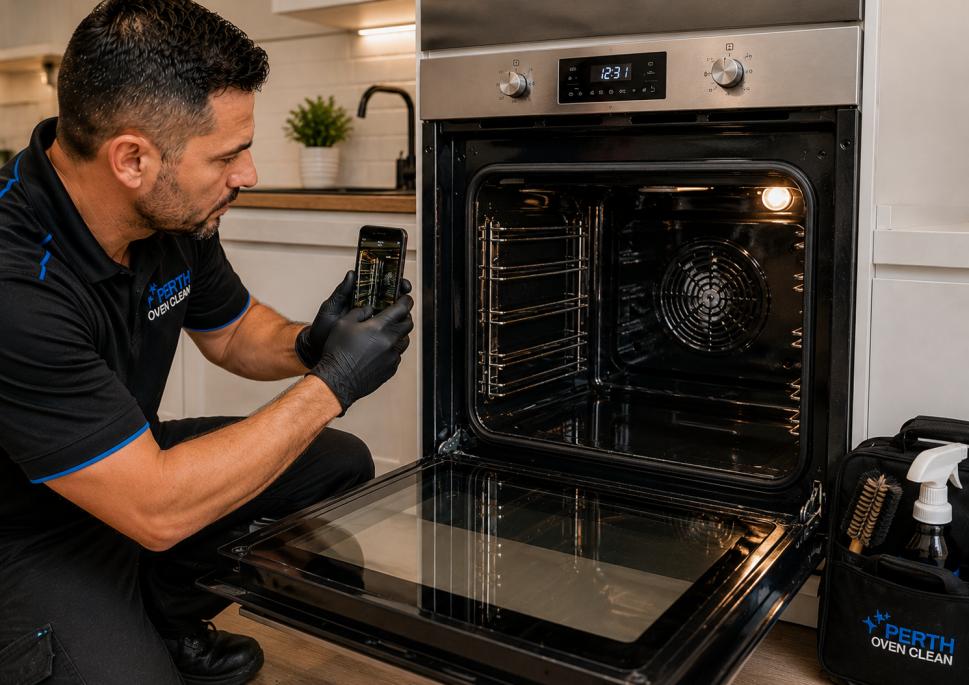
A proper deep oven clean is one of those jobs people often underestimate until they see the process firsthand.
It’s not simply spraying chemicals and giving things a quick wipe.
It involves detailed cleaning, careful handling of components, professional techniques, specialist equipment, and a whole lot of patience.
From cleaning between the oven door glass to carefully working around heating elements and restoring heavily soiled racks, a true deep oven clean is a surprisingly involved process.
And while it might take a couple of hours to complete properly, the end result is often an oven that looks fresher, cooks cleaner, smells better, and feels almost brand new again.
Which is probably a pretty good outcome for something that’s spent years being blasted with grease, heat, cheese explosions, and the occasional forgotten garlic bread.